Crawl space moisture barrier installation directly lowers subfloor relative humidity, depriving subterranean termites, wood-boring beetles, and American cockroaches of the damp nesting habitat they require under…
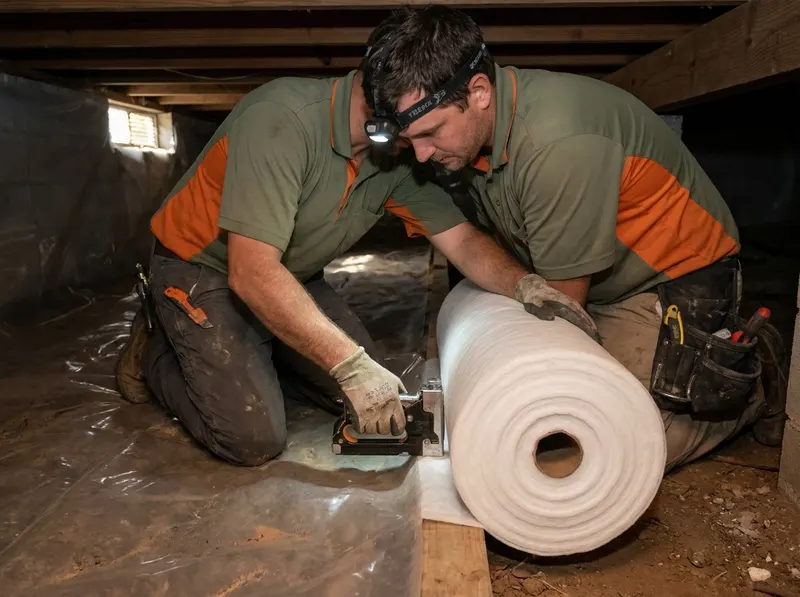
Crawl space moisture barrier installation directly lowers subfloor relative humidity, depriving subterranean termites, wood-boring beetles, and American cockroaches of the damp nesting habitat they require under residential subfloors. In older neighborhoods like Shandon, Earlewood, and Elmwood Park, homes built on unsealed brick piers or continuous block foundations draw heavy humidity straight out of the Richland County water table. Ground moisture evaporates into joists and sill plates, elevating wood moisture content above the critical 19 percent threshold where fungal decay begins. A fitted polyethylene barrier blocks soil evaporation, stabilizing subfloor framing and preventing pest reproduction beneath family living areas.
Material thickness dictates structural longevity under differing crawl space uses. A 6-mil reinforced polyethylene sheet suits standard storage-free crawl spaces common in Rosewood and Cottontown, providing dependable vapor control at an accessible price. For crawl spaces housing air handlers, water filtration units, or frequent maintenance foot traffic, typical in Forest Acres and Heathwood residences, thicker 12-mil or 20-mil woven poly barriers resist puncture and tearing against rough granite or river-rock fill. The trade-off centers on upfront material expenditure against tensile durability: 6-mil plastic shields ground moisture effectively when left undisturbed, whereas 20-mil reinforced sheeting endures decades of service access without rupture.
Effective installations adhere to strict preparation and mechanical sealing standards. The procedure follows four steps: 1. Clearing all scrap wood, cellulose debris, and old poly fragments from the soil floor. 2. Grading rough soil low spots to reduce localized pooling. 3. Laying out continuous barrier runs with minimum 12-inch seam overlaps sealed using heavy-duty acrylic vapor tape. 4. Fastening the sheeting 6 to 12 inches up the interior foundation walls with mechanical masonry anchors. In low-elevation parcels near Lake Katherine and Old Shandon, combining ground-cover barriers with crawl space dehumidification manages persistent relative humidity during humid Midlands summers without locking chemical odors into HVAC ducts.
Every job gets a firm, written price after a free on-site visit.
Tell us about your crawl space moisture barrier installation job in Columbia and we'll send a clear, written quote, usually the same day.
 Orelvo Pest Care