Pest control services in Columbia deliver targeted domestic relief and physical containment for homeowners confronting structural damage and active biological contamination. Property owners navigating persistent infestations find dedicated pest control service near me to restore sanitary conditions and prevent recurring seasonal intrusions.
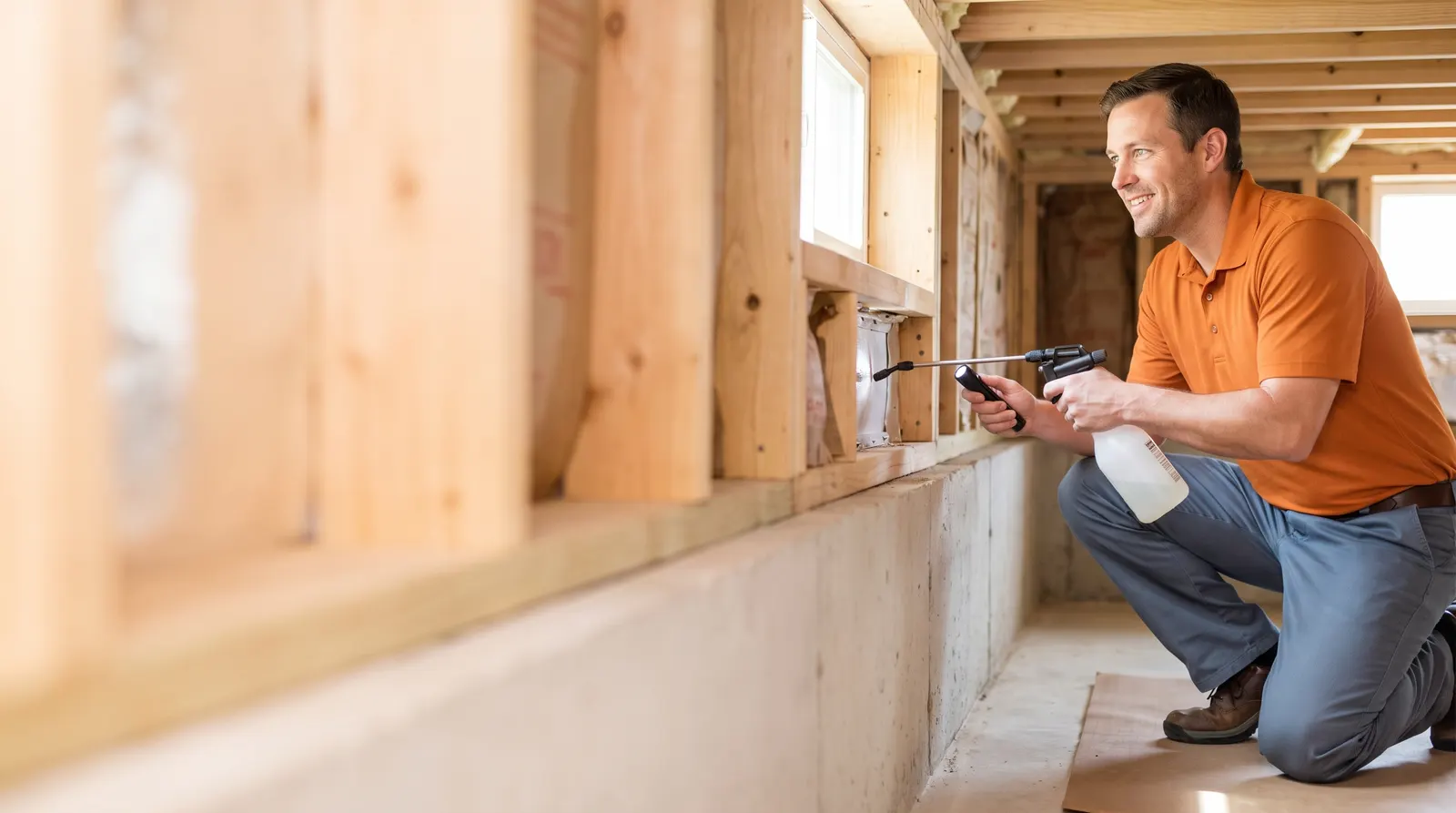
Pest control services in Columbia provide systematic inspection, mechanical exclusion, and targeted biological or chemical eradication treatments to eliminate active insect, rodent, and fungal infestations in residential and commercial properties throughout Richland County.
Every service reflects the same meticulous attention to detail, whether it's a single job or a larger pest control sevice project across Columbia.
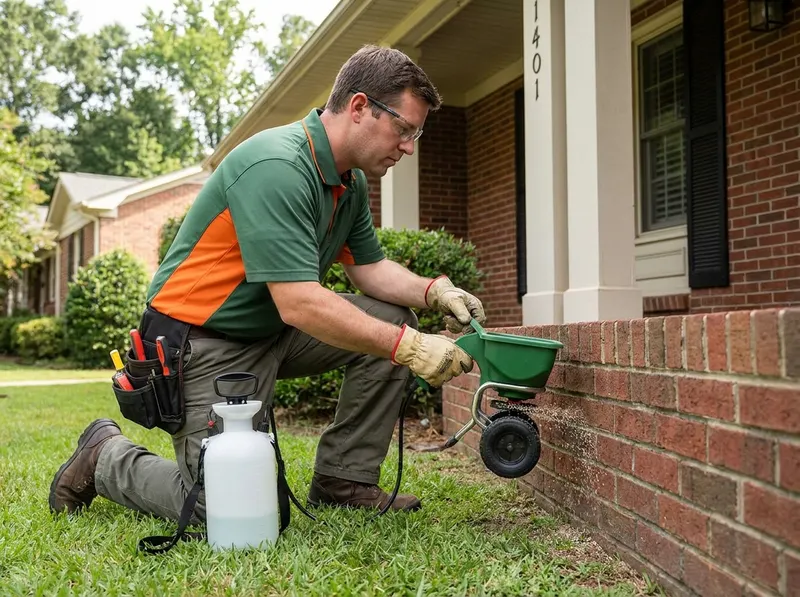
General pest control services establish a protective physical and chemical perimeter around domestic structures to suppress common opportunistic invaders. Treatment protocols target German cockroaches, American cockroaches (palmetto bugs), silverfish, house spiders, and nuisance ants. Technicians conduct an exterior foundation spray extending 3 feet up the wall and 5 feet out onto soil or hardscaping, clear exterior spider webs and mud dauber nests from eaves, and inject targeted gel baits or desiccants into plumbing penetrations behind wall voids. Standard initial clean-outs start at $200, transitioning to flexible recurring cycles that avoid restrictive multi-year contracts.
Get a quote →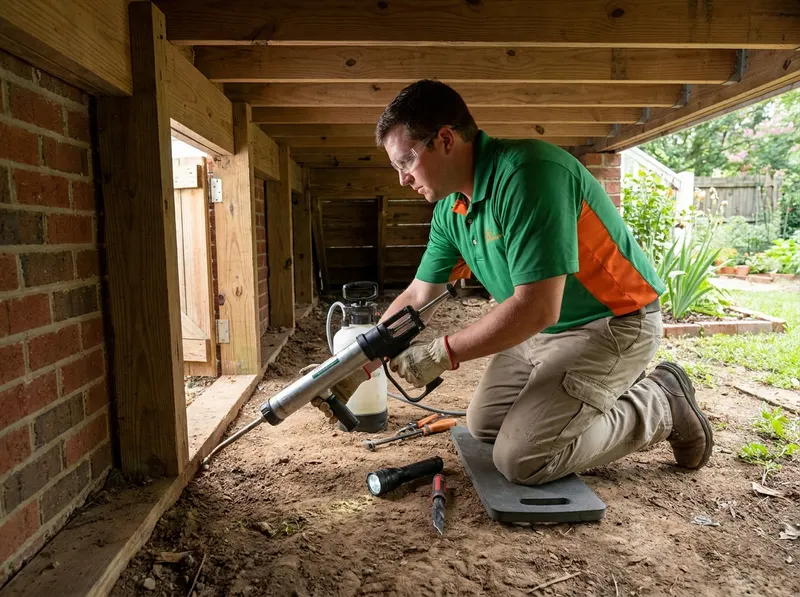
Subterranean termites (Reticulitermes flavipes and Reticulitermes virginicus) cause catastrophic silent damage to South Carolina pine framing. Comprehensive termite mitigation combines non-invasive acoustic or thermal inspections with continuous chemical barriers or localized baiting arrays. Trenching and rodding methods introduce non-repellent termiticides such as fipronil into the structural perimeter soil at a rate of 4 gallons per 10 linear feet, establishing undetectable lethal transfer zones that eradicate entire subterranean colonies. Annual re-inspections monitor slab joints, crawl space piers, and expansion cracks, ensuring long-term structural security for high-risk historic homes.
Get a quote →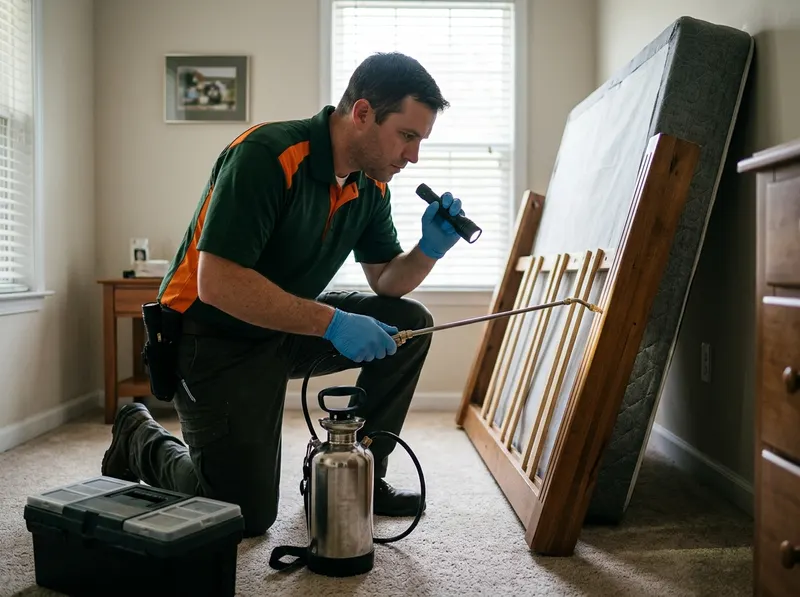
Cimex lectularius infestations disrupt sleep and present severe emotional and physiological stress. Remediation protocols combine targeted thermal mortality techniques and non-residual insect growth regulators applied to mattress seams, box springs, headboards, baseboards, and electrical plate voids. Lethal equilibrium requires maintaining interior ambient heat levels above 122 degrees Fahrenheit (50 degrees Celsius) for a minimum of 4 hours to eradicate adult insects, nymphs, and unhatched eggs in a single intervention. Chemical and desiccant dust applications reinforce perimeter perimeters, with pre-treatment preparation checklists provided to ensure deep penetration.
Get a quote →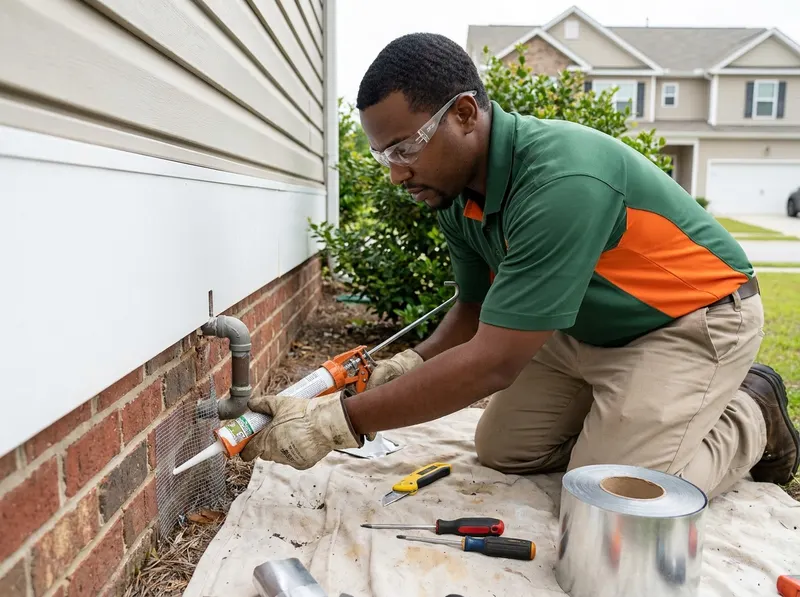
Roof rats (Rattus rattus) and Norway rats (Rattus norvegicus) exploit architectural vulnerabilities to contaminate blown attic insulation, gnaw electrical wiring, and introduce zoonotic pathogens. Complete exclusion services identify and seal all structural gaps larger than 0.25 inches using galvanized 19-gauge steel wire mesh, metal flashing, and industrial backing mortars. Following mechanical exclusion, active colonies are eliminated through mechanical snap traps positioned along established transit runways inside attics and basements, avoiding interior secondary rodenticide poisoning risks. Complete sanitation and localized enzymatic clean-up follow containment.
Get a quote →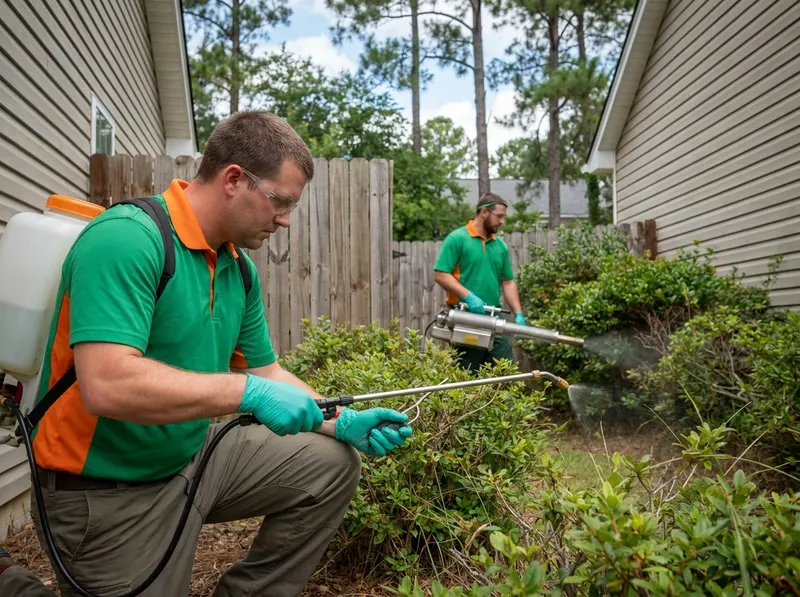
Asian tiger mosquitoes (Aedes albopictus) breed aggressively in small volumes of standing water and foliage shade. Targeted mosquito reduction programs utilize gas-powered ultra-low volume (ULV) mist blowers to coat the undersides of broadleaf shrubs, ivy beds, under-deck spaces, and perimeter canopy lines with synthetic pyrethroids combined with microencapsulated barrier agents. In conjunction with surface adulticide treatments, technicians deposit granular Bacillus thuringiensis israelensis (BTI) biological larvicides into standing water features, catch basins, and unmanaged drainage gutters to halt metamorphosis at the larval stage without harming beneficial organisms.
Get a quote →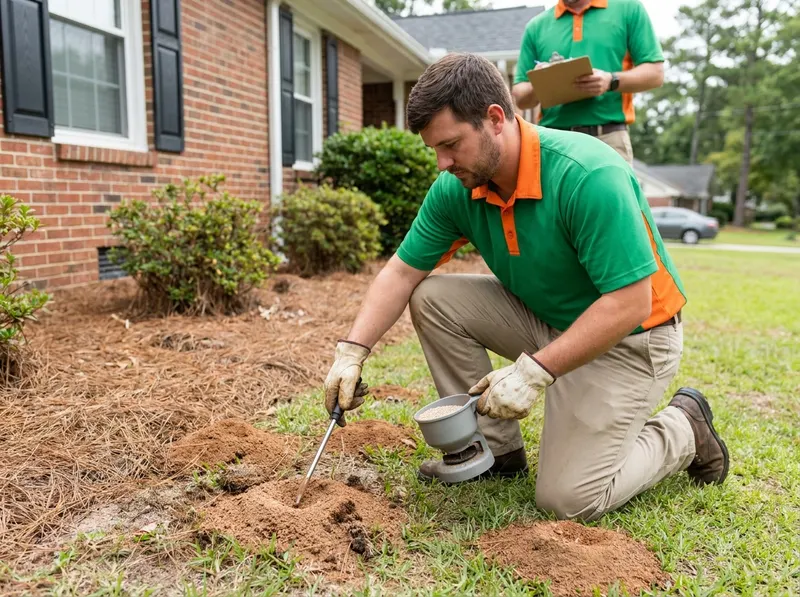
Red imported fire ants (Solenopsis invicta) construct extensive subterranean nests throughout lawns, posing painful stinging risks to children and pets. Effective management avoids disorganized mound drenching, which typically fragments the colony into multiple satellite queens. Systematic eradication utilizes broadcast granular baits containing metabolic inhibitors or insect growth regulators distributed across turf areas at labeled agricultural rates. Foraging worker ants carry the attractant bait deep into subterranean brood chambers, sterilizing the queen and collapsing the colony structure within 14 to 28 days across up to an acre.
Get a quote →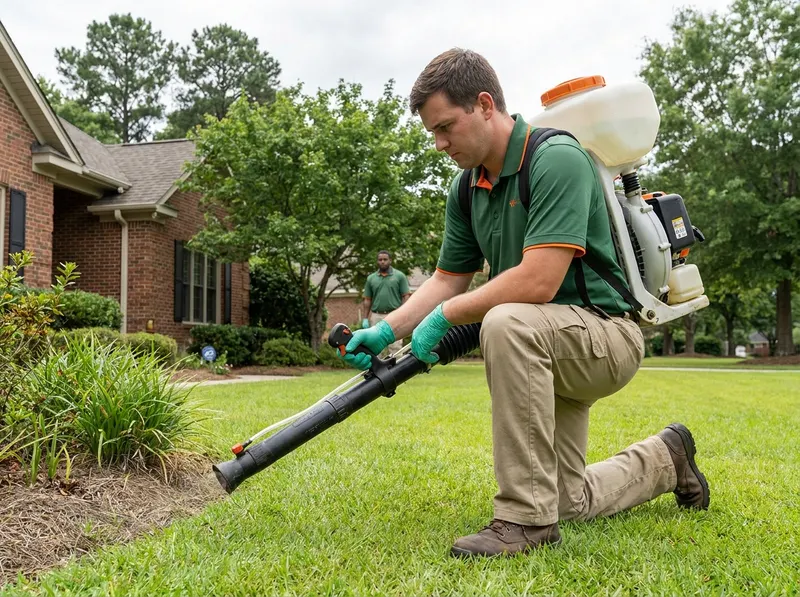
Sub-surface turf pests degrade root systems and create unsightly patch necrosis across residential lawns. Targeted surface and sub-surface treatments suppress Southern chinch bugs, armyworms, sod webworms, and mole crickets that destabilize St. Augustine, Centipede, and Zoysia grasses. Technicians deploy targeted systemic insecticides combined with contact granular active ingredients calibrated to local rainfall patterns. Controlled soil applications preserve beneficial soil microbes while halting insect mastication and subterranean tunnel disruption before turf requires complete sod replacement.
Get a quote →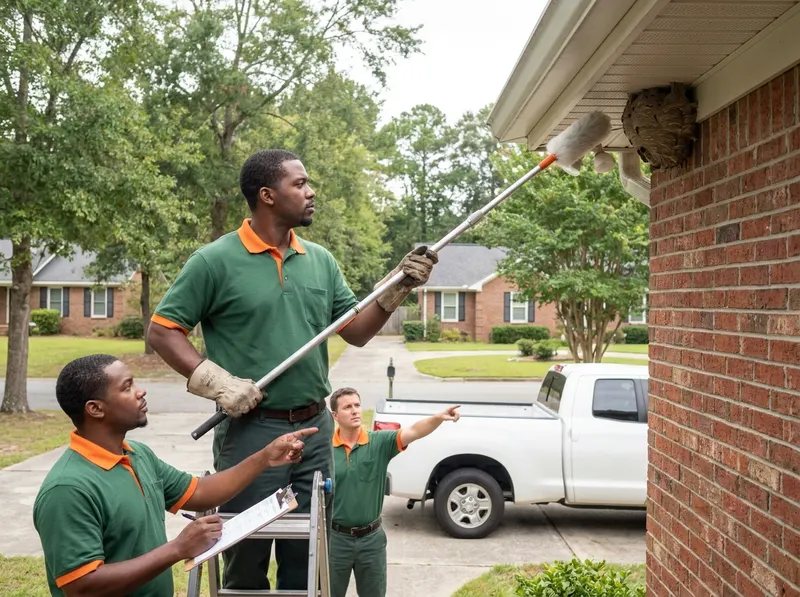
Aerial yellowjackets, paper wasps, bald-faced hornets, and bumblebees construct defensive nests under eaves, beneath decking, inside utility boxes, and directly in subterranean ground voids. Extraction technicians utilize protective flight suits, aerosol knockdown concentrates, and directional micro-dust injectors to neutralize aggressive colonies safely without causing secondary dispersal into interior living areas. Following colony mortality, workers physically remove nesting materials and apply localized olfactory masking agents to prevent subsequent queens from re-colonizing the established nesting zone.
Get a quote →You get a firm, itemized quote for your pest control sevice before any work begins, no surprises, no pressure.
Careful prep, tidy work, and a full cleanup when we are done. We treat your home and belongings like our own.
The same trusted, background-checked team from the first call to the final check.
If you observe active live wood destruction, discarded winged swarmers, or mud shelter tubes along foundation footers, choose a targeted subterranean termite liquid termiticide barrier or hexaflumuron bait station installation; if insects are confined to baseboards, cabinetry, and plumbing voids, choose quarterly general interior and exterior perimeter pest control. The operational trade-off centers on treatment persistence and installation footprint: liquid termiticides provide 5 to 10 years of structural soil protection but require exterior perimeter trenching and foundation drilling, whereas quarterly perimeter surface barriers break down within 60 to 90 days under direct ultraviolet radiation and summer rainfall. For yards facing biting insects from May through September, choose seasonal barrier misting combined with biological larvicides; if surface activity consists of subterranean tunneling and mound-building in open turf, choose broadcast juvenile insect growth regulator baits for red imported fire ants.
The trade-off involves application timing and ecological scope: perimeter barrier sprays immediately clear resting foliage of adult mosquitoes but require repeat visits every 21 to 30 days, while fire ant baiting requires 2 to 4 weeks for worker ants to ingest and share hydramethylnon or methoprene with the queen, delivering long-term colony collapse rather than instant knock-down. For severe bed bug infestations, choose whole-structure structural heat or fumigation; for isolated, portable commodities or high-value antique furniture, select vault fumigation. Whole-structure applications eliminate all life stages across inaccessible wall cavities at a higher capital investment, whereas containerized vault fumigation treats localized personal items without applying volatile compounds inside living areas.
Every project gets a firm, written price after a free on-site visit. Ranges below for orientation.
Tell us about your pest control sevice job and we'll send a clear, written quote, usually the same day. Or just call and talk to a real Columbia pro.
(803) 343-9272
Columbia's subtropical river basin microclimate, shaped by the confluence of the Broad and Saluda Rivers, generates prolonged periods of high ambient humidity and prolonged summer heat. Historic timber-framed homes throughout shaded neighborhoods like Earlewood, Shandon, and Elmwood Park frequently sit over raised brick piers with vented dirt crawl spaces, exposing pine floor joists to ambient ground moisture and persistent subterranean termite pressure. Additionally, dense tree canopies near waterways like Columbia Canal and Riverfront Park provide prime arbor habitats for roof rats, which exploit historic rooflines and eaves as soon as late-autumn temperatures decline across Richland County.
Free estimates for Columbia & the surrounding area.
 Orelvo Pest Care